Why Your Warehouse Racking Just Failed Your Fire Inspection
July 21, 2026

July 21, 2026
The local fire marshal just walked through your warehouse, pointed his flashlight at your top storage racks, and handed your warehouse manager a notice of violation. Your operations immediately grind to a halt. You are legally forbidden from loading new inventory into those top racks, daily fines are hanging over your head, and your team is completely confused because the overhead sprinkler system is brand new and not leaking.
Warehouse fire safety involves much more than simply installing overhead pipes and hoping for the best. The physical geometry of how you stack your cardboard boxes, plastic pallets, and shrink wrapped goods directly dictates whether your building will survive a fire or burn to the ground. Before you start completely dismantling your entire supply chain layout, here is your emergency guide to understanding warehouse clearance codes, the fluid dynamics of fire suppression, and how to safely correct your racking violation.
If an inspector has flagged your pallet racks or storage shelving, you must take immediate, documented action to prove you are actively mitigating the hazard while awaiting a permanent fix.
Warehouse managers are trained to maximize every single cubic foot of available space to increase profitability. Unfortunately, this operational efficiency often directly contradicts National Fire Protection Association (NFPA) life safety codes. Here are the three most common reasons your storage racks just failed inspection.
Myth: Many facility managers assume that as long as a pallet of goods is not physically touching or crushing the sprinkler pipe, the system is perfectly fine. They stack inventory as close to the ceiling as the forklift will allow.
Reality: NFPA 13 explicitly requires a minimum of 18 inches of completely empty clearance space beneath the sprinkler head deflectors. A fire sprinkler does not just drop water straight down; the deflector plate is engineered to shatter the water stream and fan it outward into a specific umbrella pattern.
If you stack a large box 10 inches away from the sprinkler, that box acts as a physical shield. It completely blocks the outward spray pattern, creating massive dry zones in the surrounding area where the fire can spread unimpeded.
Myth: When setting up back to back pallet racks, warehouse teams often push pallets deep into the rack until they touch the pallets on the opposite side. It feels like a smart way to maximize density and prevent goods from falling into the aisle.
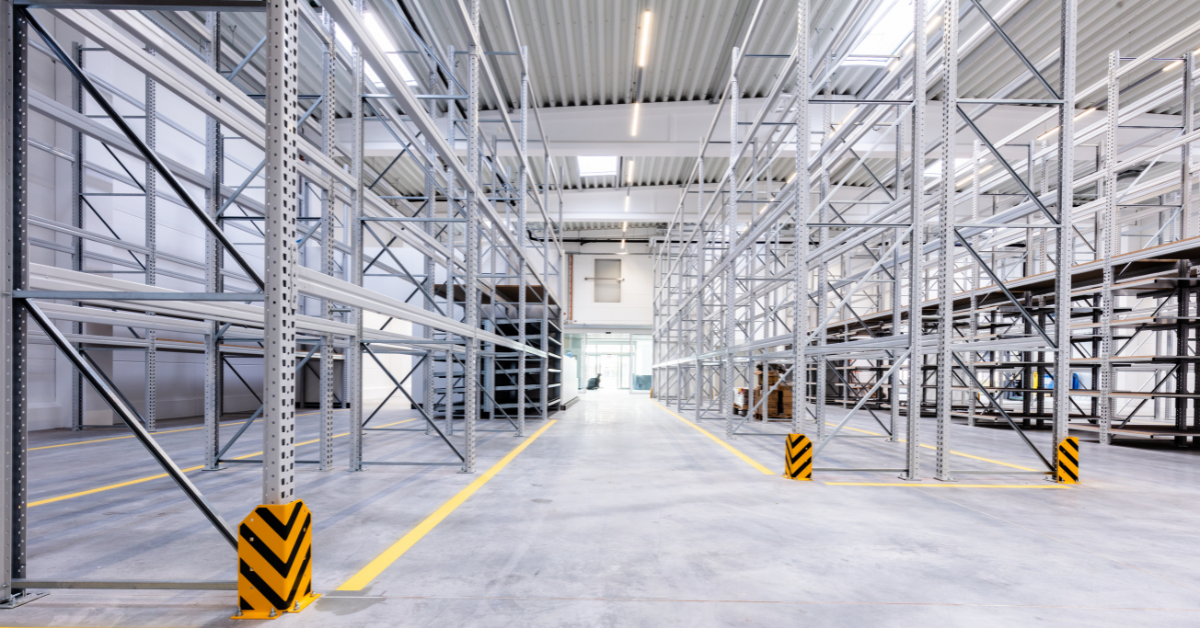
Reality: Fire dynamics rely heavily on heat rising. Commercial racking systems require intentional vertical gaps called "flue spaces" between the rows of pallets. These empty vertical chimneys serve two critical purposes. First, they allow the extreme heat of a low level fire to rocket up to the ceiling and trigger the sprinklers fast. Second, they allow the water from those activated sprinklers to travel all the way down to the base of the fire.
If your team shoves pallets together and blocks the flue spaces, the heat gets trapped under the steel racks and spreads horizontally through your inventory. By the time enough heat leaks out to trigger the overhead sprinklers, the fire is out of control, and the water cannot penetrate the blocked racks to put it out.
Myth: You signed a lease for a warehouse with massive 30 foot ceilings, so you naturally assume you can stack your inventory 25 feet high without any issues.
Reality: Standard commercial ceiling sprinklers are typically only engineered and legally rated to protect standard storage up to 12 feet high. Once your inventory crosses that 12 foot threshold, the building is officially reclassified as a "High Piled Combustible Storage" facility.
A standard sprinkler system lacks the water volume, pressure, and droplet size to penetrate a fire fueled by 20 vertical feet of cardboard and plastic. Stacking inventory this high requires specialized permits and a massive system overhaul.
LIABILITY WARNING: Local fire marshals strictly enforce NFPA 13 clearance codes and High Piled Storage regulations. Operating a commercial warehouse with obstructed sprinkler deflectors or unpermitted high storage constitutes a severe life safety violation. If a catastrophic fire occurs and the investigation reveals your racking layout blocked the suppression system, your commercial property insurance carrier has the right to deny your claim entirely due to gross negligence.
Arguing with an inspector about warehouse geometry is a losing battle. You need a specialized advocate who understands complex hydraulic calculations, local municipal fire codes, and the physical realities of your building.
When you bring in Hedrick Fire Protection to resolve a racking violation, our technicians look at the exact hazard you are storing and compare it directly to your current sprinkler capabilities. We provide comprehensive Fire Sprinkler Inspections to identify exactly where your system falls short of code. If your layout requires a physical upgrade to protect your high density zones, our teams handle the complete Fire Sprinkler Installation and Fire Sprinklers Repair processes. We install the correct high output sprinkler heads, drop customized piping if necessary, and submit all the complex permitting paperwork to the Authority Having Jurisdiction to clear your violation fast.
Is a red tag currently halting your warehouse operations? Do not risk a forced shutdown or a voided insurance policy. Click here to contact the Fire Sprinkler Service Team at Hedrick Fire Protection to schedule an immediate facility survey today.