Standpipe Systems and Their Role in Fire Sprinkler Networks
November 19, 2026

November 19, 2026
A fire can break out on the tenth floor of a building, far beyond the reach of hoses connected at street level. Firefighters need a reliable way to access water without running long hose lines up multiple stairwells. Standpipe systems provide water connections throughout the building and play an important role alongside fire sprinkler networks. See how standpipes operate and the inspection requirements that keep them ready for use.
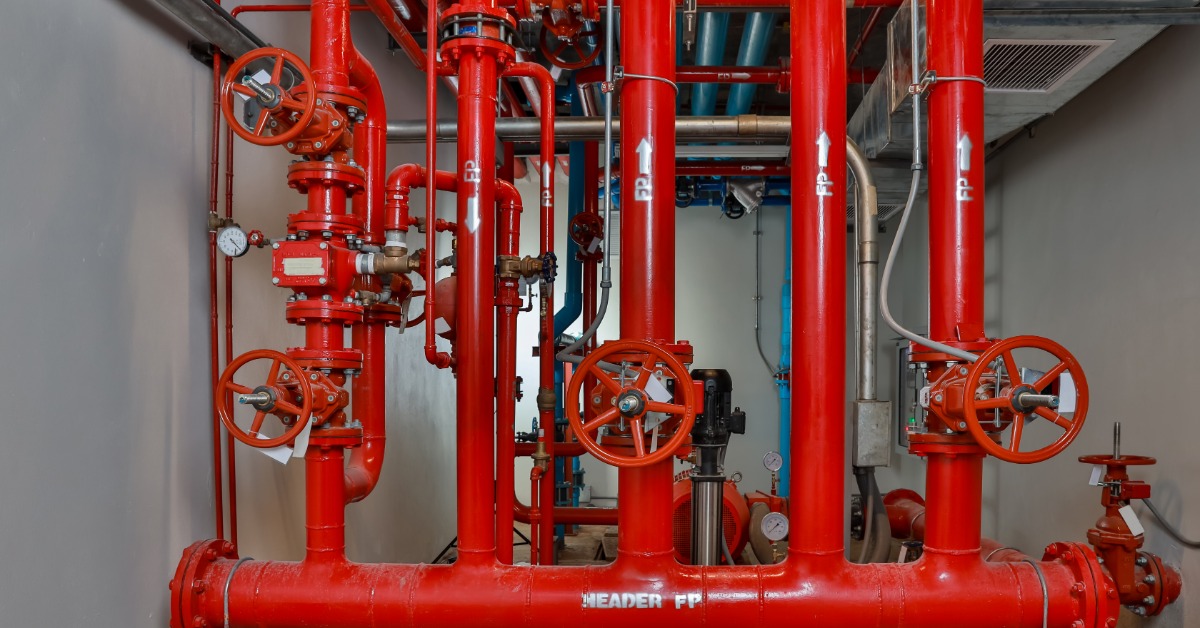
A standpipe system is a network of pipes and hose connections that gives firefighters access to water at designated locations inside a building. These systems are commonly installed in multistory buildings, stairwells, and other areas where running hoses from outside would be difficult. Rather than carrying long sections of hose through the building, firefighters can connect their equipment to outlets closer to the fire.
Standpipes are part of a building's overall fire protection infrastructure, but they serve a different purpose than automatic sprinklers. While sprinklers discharge water when heat activates individual sprinkler heads, standpipes provide connections for firefighters to operate hoses. Depending on the building's design, the two systems may operate independently or share piping and water supplies.
Standpipe systems move water through vertical and horizontal pipes to hose connections throughout a building. When firefighters arrive, they can attach their hoses to designated outlets and direct water toward the fire. Depending on the system's design, water may be supplied automatically or require fire department pumping to reach the necessary pressure and flow.
Standpipe systems play an important role in fire sprinkler networks, particularly when both rely on shared water supplies. Some systems draw water from municipal supplies or storage tanks, sometimes using fire pumps to increase pressure. Others depend on fire department apparatus to deliver water at the required pressure, particularly when serving upper floors or locations far from the main supply.
Several components work together to deliver water where firefighters need it. Vertical pipes, called risers, carry water between floors, while hose valves provide points where crews can connect their equipment. Fire department connections allow responders to supply or supplement water from outside the building, depending on the system's design. Other components, including control valves and pressure-regulating devices, support water distribution.
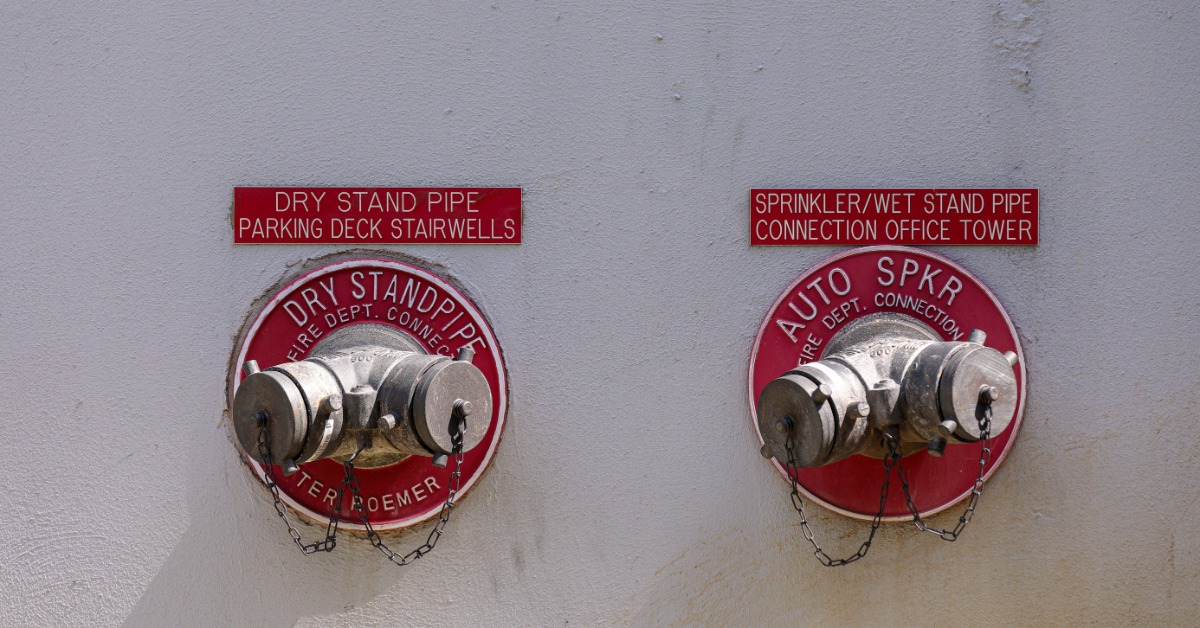
Standpipe systems are categorized by how they receive water and whether their pipes normally contain water. Some can deliver water immediately when a hose valve opens, while others require manual activation or fire department pumping. The appropriate configuration depends on the building's design, environmental conditions, and applicable fire protection requirements.
The five main types of standpipe systems are:
Both standpipes and sprinklers deliver water for fire protection, but they serve different purposes during an emergency. Sprinklers can begin controlling a fire before firefighters arrive, while standpipes provide water access for crews operating hoses. The difference comes down to how they're activated, where they deliver water, and how they're used to fight fires.
Fire sprinkler systems are designed to control or suppress fires automatically, often before emergency crews arrive. Standpipes, on the other hand, provide firefighters with a reliable water source for directing hoses toward a fire. While sprinklers protect designated areas without requiring manual operation, standpipes support firefighters as they respond to changing conditions.
Individual sprinkler heads activate when they reach a specific temperature, releasing water over the affected area. Standpipes don't automatically discharge water into a room because personnel must connect hoses and open the appropriate valves. Depending on the standpipe type, water may be immediately available or require additional steps to supply the necessary pressure.
Sprinkler heads are distributed throughout designated areas of a building to provide protection where fires may start. Standpipe hose connections are installed at specific locations, often in stairwells, so firefighters can reach different floors without running hoses from outside. Unlike sprinklers, which discharge water from fixed locations, standpipes let crews direct water through hoses to areas requiring additional firefighting efforts.
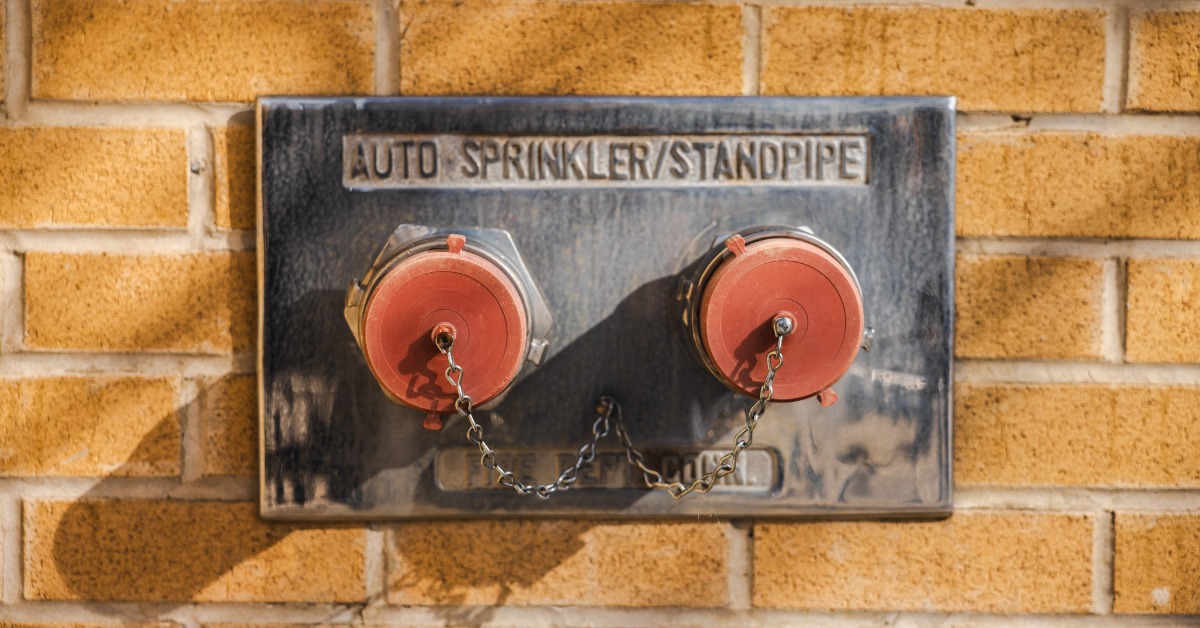
Although standpipes and sprinklers have different functions, they can operate as part of the same water-based fire protection network. When a fire starts, sprinklers may activate first, controlling its spread while firefighters make their way to the affected area. If crews need to use hoses, standpipe connections provide access to water without requiring them to run supply lines from outside.
A combination system uses shared standpipe piping to supply both firefighting hose connections and automatic sprinklers. This setup can reduce the amount of separate piping needed while providing both forms of protection. Sprinkler branch lines connect to designated sections of the standpipe piping, allowing water to reach sprinkler heads throughout the protected areas. Because both systems use some of the same infrastructure, designers must account for their respective demands when determining pipe sizes and water supply capacity.
Both standpipes and sprinklers need adequate water flow and pressure to operate as designed. In taller buildings, fire pumps may be necessary to move water to upper floors, where elevation and friction losses reduce available pressure. Combination systems must meet applicable water demand requirements, which may include supplying sprinklers and firefighting hoses simultaneously. Pressure-regulating devices may also be needed to limit excessive pressure at lower-level connections while maintaining sufficient pressure throughout the building.
Regular inspections and testing are necessary to confirm that standpipe systems remain in working condition. NFPA 25 establishes requirements for inspecting, testing, and maintaining water-based fire protection equipment, including standpipes. The specific schedule depends on the system type, its components, and the edition of the standard adopted by the local authority.
During an inspection, technicians check accessible components for damage, deterioration, and other conditions that could interfere with operation. Testing goes a step further by evaluating whether equipment and system functions perform as required. Coordinating standpipe maintenance with other fire sprinkler services can simplify scheduling and recordkeeping, particularly when the systems share equipment.
A standpipe system may go years without being used, but it needs to work properly the moment firefighters connect their hoses. Problems with water pressure, damaged valves, or inaccessible connections can create delays when every minute counts. Routine inspections and testing provide an opportunity to catch these issues and maintain a building's overall fire protection.