Hydrostatic Testing Requirements for Fire Extinguishers
November 11, 2026

November 11, 2026
An extinguisher's pressure gauge may show a normal reading, but that doesn't mean the cylinder is still structurally sound. Hydrostatic testing checks the cylinder's ability to withstand pressure, and specific requirements determine when fire extinguishers must undergo this procedure. Missing a testing deadline or overlooking cylinder damage can leave a facility with equipment that shouldn't remain in service. Here's what business owners and facility managers should know about testing intervals, procedures, failure conditions, and compliance records.
Hydrostatic testing checks whether a fire extinguisher's cylinder can safely withstand pressure. During the procedure, a trained technician fills the cylinder with water and applies a specified test pressure to evaluate its structural condition. This process can reveal leaks, deformation, and weaknesses that might not be visible during a routine inspection.
Unlike a standard inspection, hydrostatic testing evaluates the cylinder's strength. It requires specialized equipment and procedures suited to the extinguisher being tested. Based on the results, the technician determines whether the cylinder can remain in service or must be removed.
Hydrostatic testing requirements for fire extinguishers set testing intervals based on the equipment's type and construction. These requirements work alongside routine inspections and maintenance to identify potential problems throughout an extinguisher's service life. Required intervals depend on factors such as the extinguishing agent, cylinder material, and construction.
Under OSHA regulations, many common portable extinguishers must be tested every five or 12 years. These intervals reflect OSHA's general testing schedule, but facilities should also check applicable NFPA 10 provisions, manufacturer instructions, and local requirements.
An extinguisher may need evaluation before its scheduled test if an inspection reveals damage or deterioration. However, certain conditions, such as severe corrosion or damaged cylinder threads, can make a cylinder unsuitable for testing altogether. In these cases, the equipment may need to be permanently removed from service rather than pressure-tested. A qualified technician can assess the damage and determine whether testing or replacement is appropriate.
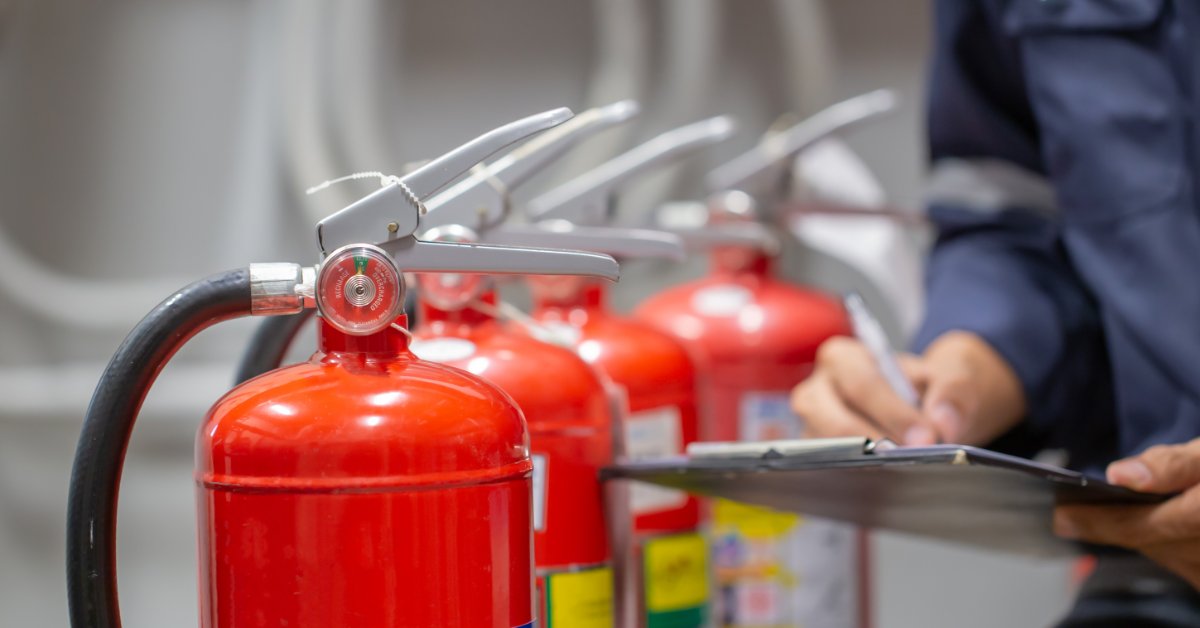
Hydrostatic testing follows a controlled procedure that evaluates cylinder strength using water instead of compressed air or gas as the testing medium. The technician applies the test pressure specified for that particular cylinder and monitors its response. Because the procedure involves high pressures and specialized equipment, it must be performed by properly trained personnel.
Hydrostatic testing follows these procedures:
The exact method can vary based on cylinder construction. Some extinguishers require specialized water-jacket testing equipment to measure how the cylinder expands under pressure.
Under OSHA regulations, extinguisher hose assemblies equipped with a shut-off nozzle at the discharge end must also undergo pressure testing. These hoses follow the same testing interval as the extinguisher they're attached to, although the required test pressure varies by extinguisher type. Testing the hose assembly checks for leaks or weaknesses that could affect its ability to withstand pressure.
An extinguisher fails hydrostatic testing when its cylinder doesn't meet the required pressure-test criteria. A leak or permanent deformation, for example, may indicate that the metal can no longer safely contain the pressure. Excessive cylinder expansion can also be a sign of structural weakness.
Corrosion is another common concern, particularly when extinguishers are stored in damp environments or exposed to chemicals. Rust and pitting can weaken cylinder walls, even if the damage initially appears minor. Some defects are serious enough that the technician must reject the cylinder during the preliminary inspection and not proceed to the pressure test.
A cylinder that fails hydrostatic testing must be removed from service and can't simply be recharged for continued use. The technician documents the failure and follows the applicable procedures for rejecting or disposing of the equipment. Facility managers then need to arrange a suitable replacement to maintain the required extinguisher coverage. Professional fire extinguisher services can simplify the coordination of testing, equipment replacement, and routine maintenance.
Hydrostatic testing records show when an extinguisher was tested and document the completed procedure. For facilities with multiple units, organized records make it easier to track service histories and identify upcoming testing deadlines. They also provide information that may be requested during a compliance inspection.
Under OSHA requirements, employers must retain hydrostatic testing certification records until the extinguisher is retested or removed from service. These records must be available upon request by an authorized OSHA representative. Depending on the equipment and location, additional documentation requirements may apply under NFPA 10 or local regulations.
Tracking testing dates can become complicated when a facility has several extinguisher types with different service schedules. An equipment inventory effectively organizes this information, including each unit's location and identification number. Recording the most recent test date and the next required deadline also makes it easier to plan service before testing becomes overdue.
Hydrostatic testing is only one part of an effective extinguisher maintenance program. Monthly visual inspections, annual maintenance, and applicable internal examinations are still necessary between pressure tests. Facilities should also arrange suitable temporary protection when extinguishers are removed for testing, so required coverage isn't interrupted.
Hydrostatic testing provides a way to verify that fire extinguisher cylinders can safely withstand pressure after years of use or storage. Because testing intervals vary by extinguisher type, it's important to know which requirements apply to each unit. A qualified technician can identify structural problems and determine whether a cylinder can remain in service. Staying current with hydrostatic testing gives facility managers greater confidence in the condition of their fire extinguishers.