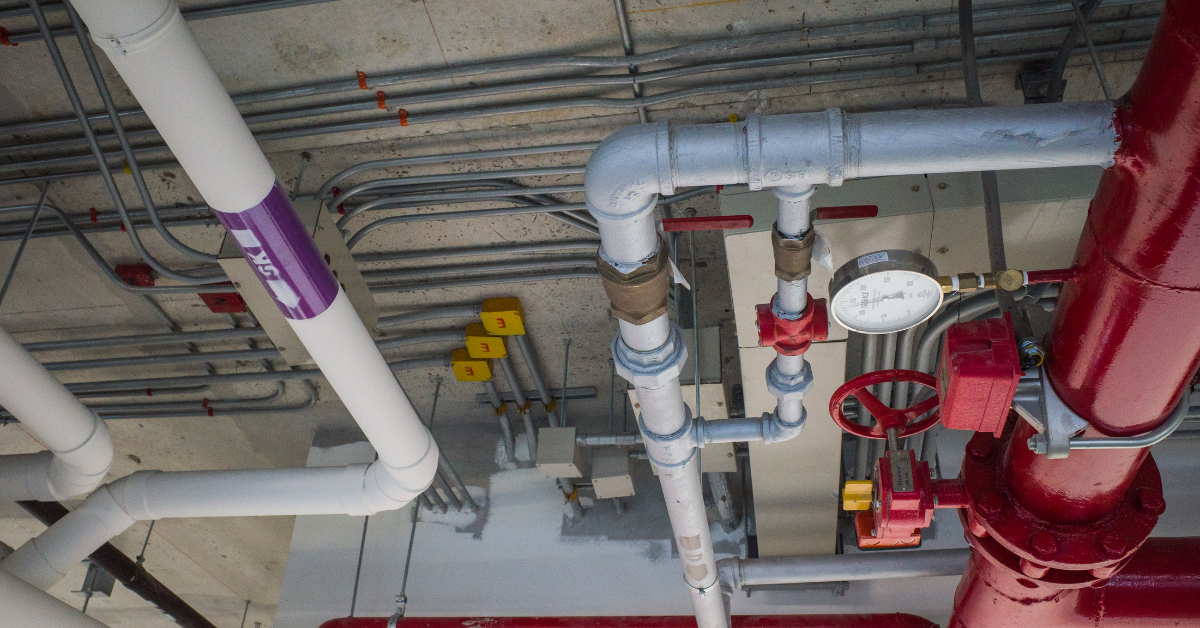
How a Renovation Can Cause a Full Replacement of Your Old Fire System
July 28, 2026

July 28, 2026
You finally secured the money to renovate your commercial building lobby and update your office floor plan. The general contractor is ready to break ground, but when you submit your architectural drawings to the city, the local fire marshal abruptly rejects the permit. Suddenly, a simple cosmetic remodel has triggered a mandatory demand to bring your entire 1980s fire alarm and sprinkler system up to modern 2026 fire codes. Your budget is instantly blown, and the project is completely stalled.
Many commercial property owners incorrectly assume their older building is permanently "grandfathered in" and exempt from new regulations as long as the building is still standing. Unfortunately, commercial fire codes do not work that way. Before you swing a sledgehammer or sign a massive contractor invoice, here is your guide to understanding exactly what triggers a mandatory life safety upgrade and how to protect your renovation timeline.
If you have just been hit with a surprise upgrade requirement from the city planning office, or if your contractor has already started unpermitted demolition, you must take immediate steps to control your financial exposure.
The term "grandfathered" is rarely used in official fire codes. Instead, municipalities look at the International Existing Building Code alongside National Fire Protection Association standards to determine when old buildings must meet new rules. Here is exactly why your remodel just triggered a massive compliance headache.
The term "grandfathered" is rarely used in official fire codes. Instead, municipalities look at the International Existing Building Code alongside National Fire Protection Association standards to determine when old buildings must meet new rules. Here is exactly why your remodel just triggered a massive compliance headache.
The Common Misconception: Many owners assume that as long as the building remains standing, they can renovate the interior piece by piece over the years without ever upgrading the core fire systems.
The Reality: Most local jurisdictions enforce a strict threshold rule. If your renovation impacts more than a specific percentage of the building's total square footage, or if the cost of the remodel exceeds 50 percent of the building's assessed value, the city categorizes the project as a Level 3 Alteration.
The Bottom Line: Hitting this threshold completely strips away your historical exemptions. The city will treat your remodel exactly like a brand new construction project. You will be legally required to install modern addressable fire alarm panels, add visual notification strobes to every room, and upgrade your sprinkler density to match current NFPA 13 requirements.
The Common Misconception: If we are not knocking down any physical walls, the old fire protection system will be perfectly fine for the new tenant.
The Reality: The fire code is based entirely on the daily operations happening inside the building, not just the physical structure. Converting a quiet retail clothing store into a high volume restaurant or leasing an old warehouse to a daycare center introduces drastically different life safety hazards.
The Bottom Line: Different business operations require completely different suppression tactics. Even if your floor plan remains identical, the fire marshal will mandate a total system redesign because the original fire protection system was never engineered to protect the new hazard classification.
The Common Misconception: Adding a few temporary partitions or tearing down a wall to create an open concept office is just a cosmetic change that does not concern the fire marshal.
The Reality: Commercial fire safety relies heavily on physical compartments to slow down the spread of smoke and flames. Building new private meeting rooms creates physical barriers that block the water spray pattern of existing sprinkler heads.
The Bottom Line: If you alter the hallways people use to escape, or if your newly built walls block existing sprinkler coverage, the original system design is entirely voided. You must drop new sprinkler piping and install new notification devices to ensure the newly created spaces are legally protected.
The Common Misconception: We only added three new offices, so we can simply buy three new smoke detectors and wire them into the existing main control board in the lobby.
The Reality: You cannot legally mix and match incompatible life safety technology. If your existing conventional fire alarm panel was manufactured in 1995, the original replacement parts are no longer fabricated. Modern digital smoke detectors cannot communicate with an old analog motherboard.
The Bottom Line: A seemingly minor tenant improvement can force you into a major technology upgrade. Attempting to tie new devices into a severely outdated system will force you to rip out and replace the entire building's central alarm control panel so the system can function uniformly.
LIABILITY WARNING: The concept of being grandfathered is a dangerous myth in commercial fire safety. The local Authority Having Jurisdiction always maintains the legal right to force an immediate, mandatory system upgrade at any time. If the fire marshal determines your current legacy setup poses a severe and immediate threat to life safety, they can revoke your Certificate of Occupancy until the building is modernized.
Dealing with the city planning office requires a level of technical fluency that most general contractors simply do not have. You need someone in your corner who speaks the fire marshal's exact language and understands the nuances of local municipal codes.
If a full upgrade is completely unavoidable, we engineer a highly efficient, code compliant system and handle all the complex permitting and hydraulic calculations directly with the Authority Having Jurisdiction. We keep your project moving forward.
Planning a commercial remodel or a major tenant improvement? Do not let a surprise code violation derail your timeline and drain your budget. Click here to contact the team at Hedrick Fire Protection to talk with a licensed professional today.