

How To Choose the Right Fire Suppression System for Kitchens
2/27/2026
2/27/2026
Running a commercial kitchen requires constant vigilance regarding safety protocols and operational efficiency. After all, you manage a complex environment filled with high heat, open flames, hot oils, and hurried staff members working in tight quarters. If you don't have the proper safeguards in place, a single spark can devastate your entire business. Therefore, you must understand exactly how to choose the right restaurant fire suppression system for your space.
Every commercial kitchen possesses unique characteristics that dictate its safety requirements. You must begin your selection process by thoroughly evaluating the physical dimensions of your space. Your suppression setup needs to cover every potential hazard zone without leaving dangerous gaps in protection.
Engineers design systems based on the square footage and the specific arrangement of your appliances. For food service operators configuring cooking lines in busy culinary districts like Anaheim, measuring the distance between cooking stations and the placement of ventilation hoods must be done carefully. You should also enlist a professional to assess your floor plan, so the suppression agent can effectively blanket every necessary surface. To see how these layout configurations fit into your broader regulatory requirements, review our blueprint on what to expect during a fire inspection.

Different cooking methods create distinct types of fire risks that require specific suppression approaches. Inventory all equipment under your exhaust hood to determine the appropriate system class. For example, deep-fat fryers generate intense grease fires that burn hotter and longer than those on a standard flat-top grill.
Class K fire suppression systems specifically target the combustible vegetable or animal oils and fats found in commercial cooking operations. You must ensure your chosen system carries the correct rating for the specific appliances you use daily.
The chemical composition of the suppression agent determines how effectively it extinguishes a fire and how much cleanup you face afterward. Most modern kitchen systems use a wet chemical agent that reacts with hot grease to form a soapy foam layer.
This process, known as saponification, cuts off the oxygen supply and cools the fuel source simultaneously to prevent re-ignition. You need to understand exactly how the agent works to protect your specific equipment.
Some older systems used dry chemicals that can contaminate food-preparation surfaces and damage sensitive electronics. Business owners prefer wet chemical agents because they clean up easily with water and minimize downtime after a discharge event. Choosing the right agent protects your expensive equipment from unnecessary damage while ensuring rapid fire extinguishment.
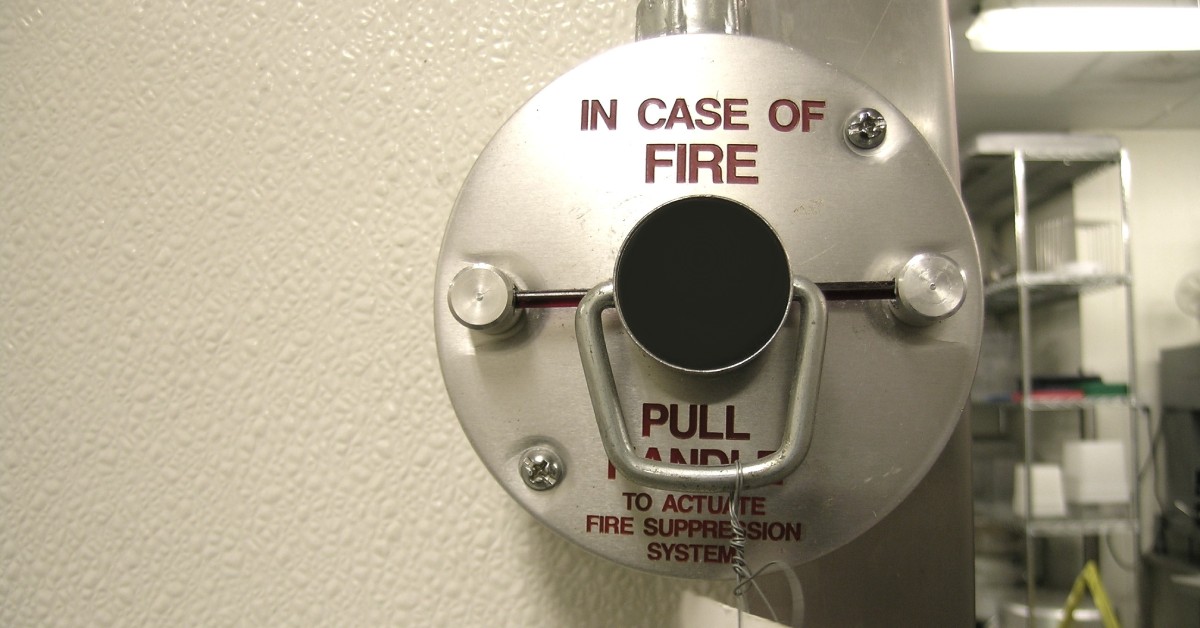
Another important step in choosing the right fire suppression system for kitchens is learning about the activation mechanisms. This remains the cornerstone of any effective fire suppression strategy. You must decide between systems that rely solely on automatic detection or those that also offer manual activation options.
Most codes require automatic detection using fusible links that melt at specific temperatures to trigger the system. However, redundancy saves lives when automatic triggers fail or react too slowly to a rapidly developing situation.
Manual pull stations let your staff activate the system the moment they spot a fire that could grow out of control. You need to position these manual triggers along the egress path so employees can activate them safely during an evacuation. Understanding the sensitivity of the automatic detection is also crucial for preventing accidental discharges during normal high-heat cooking. A well-designed system balances rapid response capability with safeguards against false alarms that disrupt your business.
Regulatory compliance dictates the minimum standards your fire suppression system must meet to operate legally. You must familiarize yourself with the National Fire Protection Association (NFPA)'s 17A standard, which covers wet chemical extinguishing systems, and NFPA 96, which addresses ventilation control and fire protection.
Local fire marshals in your jurisdiction often enforce additional requirements that exceed national standards. Failing to meet these strict codes results in failed inspections and the potential closure of your establishment. To assess structural parameters for underlying hood infrastructure hardware, building administrators verify criteria outlined in the NFPA 17A wet chemical extinguishing systems framework.
Insurance providers also require specific compliance levels before issuing a policy for your commercial kitchen. You need to verify that your chosen system meets Underwriters Laboratories 300, the standard for fire testing fire extinguishing systems. This standard specifically addresses the higher heating rates and different oils used in modern commercial cooking. Selecting a compliant system protects you from liability and ensures your insurance coverage remains valid.
The initial installation represents only the beginning of your relationship with your fire suppression system. You must consider the ongoing maintenance needs and the availability of refill services for the system you choose. Choosing a system with readily available parts and authorized service technicians in your area prevents extended downtime.
Some proprietary systems lock you into specific service providers who may charge premium rates for routine maintenance. You should investigate the long-term costs of ownership, including the price of recharging the system after a discharge. Accessible components and standard fittings make repairs faster and less expensive over the life of the system. Prioritizing serviceability ensures your kitchen remains protected without draining your operational budget.
Your kitchen fire suppression system should not operate in isolation from the rest of your building's safety infrastructure. Select a system that integrates seamlessly with your main building fire alarm panel.
When the kitchen system activates, it must instantly trigger the building-wide alarm to alert all occupants to evacuate. This integration is critical for the safety of your dining room guests and hotel patrons. Furthermore, the system must automatically shut off the fuel supply to your cooking appliances upon activation. This gas or electric shut-off valve prevents continuous pumping of fuel into an active fire.
You should also ensure the system ties into your ventilation hood to keep the exhaust fans running, which helps remove smoke from the kitchen. A fully integrated approach minimizes damage and maximizes life safety during an emergency event.
The quality of the installation matters just as much as the hardware itself. Partner with a fire protection company that demonstrates extensive experience specifically with commercial kitchen environments.
An inexperienced installer might position nozzles incorrectly or fail to properly calculate the hydraulic flow. Instead, look for a provider who offers comprehensive services from design and permitting to installation and long-term maintenance. Verify that the company holds all necessary state licenses and carries adequate liability insurance. Additionally, ask for references from other local restaurant owners to gauge their responsiveness and technical expertise. Trusting your safety to established experts guarantees that your system performs flawlessly when you need it most.
Selecting the appropriate fire suppression system guards your kitchen from disaster. By carefully analyzing your specific needs, you can choose a solution that helps eliminate kitchen hazards.
Rely on Hedrick Fire Protection for quality equipment and expert installation services. Our team has extensive experience providing fire protection services in San Diego. Contact us today so we can provide you with peace of mind in a high-risk industry.