

Do Fire Extinguishers Expire and Will It Still Work?
11/21/2025
11/21/2025
A fire extinguisher can be an invaluable tool when your company or facility experiences a fire-related emergency. However, you may wonder about its lifespan and reliability over time. If you've asked the question, "Do fire extinguishers expire and will they still work?" this blog can give you all the answers you need.
Let's address the main issue first: yes, a fire extinguisher can expire, diminishing its operational readiness over time. For business owners and facility managers safeguarding commercial properties or office spaces in bustling corporate districts like Santa Ana, most manufacturers recommend replacing disposable, non-rechargeable fire extinguishers every 12 years from the date of manufacture.
However, if you have a rechargeable model, you should have it serviced every 6 years. This will allow it to enjoy a healthy 12-year lifespan. Staying diligent with this timeline ensures your facility remains completely aligned with modern fire code updates that affect businesses in 2026.
The type of extinguisher you have directly impacts its maintenance schedule and eventual replacement timeline, so it is essential to know which kind is installed in your facility. The date of manufacture is also a crucial piece of information for any facility manager to know. You should be able to find this date stamped on the extinguisher's cylinder or printed on its label. From this date, the countdown begins.
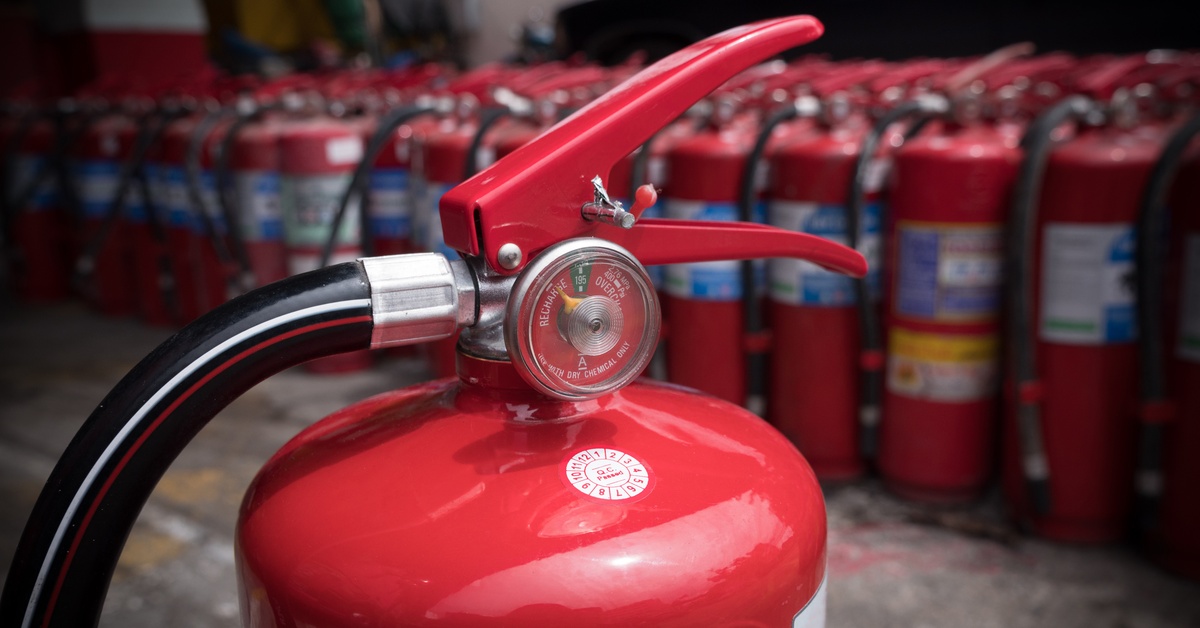
Now that you know that fire extinguishers do expire, you may wonder why. One primary reason is the potential for gradual depressurization. Extinguishers contain a compressed gas, known as a propellant, that expels the fire-suppressing agent.
Over many years, seals and O-rings in the valve assembly can degrade, allowing this propellant to slowly leak out. When the pressure drops below the acceptable range indicated on the gauge, the extinguisher will not have enough force to discharge its contents effectively in an emergency, potentially failing when you need it most.
Furthermore, the chemical agents inside the extinguisher can degrade or become compromised. In dry chemical extinguishers, the fine powder can compact and clump over time, especially when exposed to vibrations or humidity. This clumping, known as "caking," can prevent the agent from flowing freely through the hose and nozzle, rendering the extinguisher useless.
For property management teams and business safety coordinators monitoring facilities in regional corporate centers like Fullerton, imagine reaching for an extinguisher during an office fire, only to find the agent is blocked and the device is ineffective. This scenario is more common with outdated units. Managers verify container pressure baselines using the OSHA portable fire extinguisher inspection guide.
Similarly, water-based agents can cause internal corrosion of the steel cylinder over many years, weakening its structure and potentially leading to a catastrophic failure during use or testing.
This makes it dangerous for you to rely on an expired unit in your business or building. In the critical moments of a fire, you need absolute certainty that your equipment will perform as expected. A malfunctioning extinguisher can lead to a small, controllable fire quickly growing into an uncontrollable disaster.
From a legal and financial standpoint, using an expired extinguisher could result in denied insurance claims and citations from fire marshals for noncompliance with safety regulations. The potential consequences far outweigh any perceived savings from delaying replacement.
Business owners and facility managers must also consider the impact on their reputation. News of an ineffective emergency response, especially the use of an expired extinguisher, can damage public confidence and expose your operation to unwanted scrutiny. Investing in proper maintenance and replacement plans not only enhances safety but signals your commitment to protecting your employees, customers, and property.
An expiration date provides a general guideline for replacement, but it does not replace the need for regular inspections and professional maintenance. Monthly visual inspections, which you can perform in-house, are the first line of defense.
During these checks, you should confirm the extinguisher is in its designated location and that the pressure gauge is in the green "charged" zone. You should also check for any visible signs of damage, such as dents, rust, or leaks around the nozzle or handle.
Monthly checks ensure that extinguishers have not been accidentally discharged or tampered with. It is also essential to verify that the operating instructions are legible. Faded labels or missing pins are signs that the unit may need professional attention. Performing a gentle shake or inversion for some powder models helps prevent agent caking, keeping it ready for action.
You should also have technicians perform annual inspections of your extinguishers. This inspection is more comprehensive and involves verifying the mechanical components, the extinguishing agent, and the unit's overall condition.
The technician will attach a new service tag indicating the inspection date and confirming that the extinguisher is fit for service for another year. This professional oversight is essential for catching potential issues that an untrained eye might miss.
These inspections are not only about compliance; they are about building a culture of safety within your organization. Technicians can also train your staff on the proper use of extinguishers and what to look for during routine checks. Documentation from these inspections is crucial for regulatory bodies, insurance audits, and potential incident investigations.

Periodic hydrostatic testing is a non-negotiable requirement for hydrostatic fire extinguishers. This process involves emptying the extinguisher and subjecting the cylinder to high-pressure water to test its structural integrity.
It will detect any invisible corrosion, stress fractures, or other weaknesses that could cause the cylinder to rupture under pressure. If the cylinder passes the test, professionals will dry, reassemble, recharge, and certify it for another period of service.
A failed hydrostatic test means the cylinder is unsafe and must be permanently removed from service. This testing ensures that a seemingly intact extinguisher can withstand the immense internal pressure required for it to function correctly and safely.
Hydrostatic testing requires specialized equipment and expertise to perform safely, which is why fire protection professionals must carry it out. Business owners and facility managers should maintain a service log to record the date of the last test and plan for upcoming tests well in advance. A robust maintenance schedule reduces downtime and minimizes the risk of non-compliance, allowing you to focus on running your business without worrying about fire safety.
Ensuring every extinguisher is within its service life, properly inspected, and ready for immediate use is a cornerstone of a responsible safety program. Don't wait for an emergency to discover a failure; closely monitor the dates on your extinguishers and have regular inspections performed to ensure they will keep you safe in an emergency.
If you need professionals to perform yearly fire extinguisher inspections and other services on your units, contact Hedrick Fire Protection today. Our experienced staff can help make your extinguishers more reliable so you and your tenants will feel more at ease.